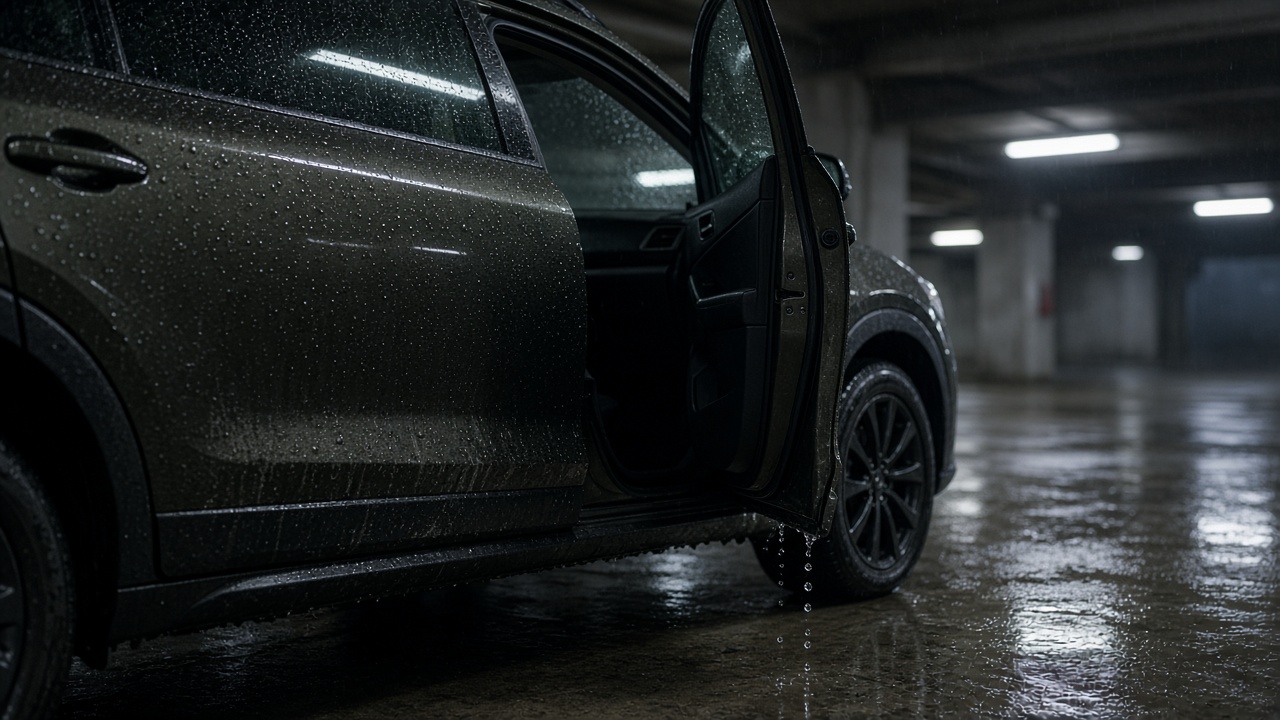
A long November rain can leave a drip at Vancouver door bottoms and a dull tide line on the rockers. See what to wipe, and what to leave. Book a mobile detail.
Tuesday, November 3, and the evenings are already dark. The clocks fell back on November 1, so a commute that used to finish in daylight now ends under parkade lights in Yaletown, on a Burnaby hill, or in a Richmond stall. Early November is also when a multi-day rain, the kind the south coast often calls an atmospheric river, can sit over Metro Vancouver and the Fraser Valley. The part that keeps causing trouble is lower: a drip still leaving the bottom of the door, and a dull band along the rocker.
This guide stays on that lower edge. It covers the drip at the door bottom, the wet sill you see when you open the door, and the tide line spray leaves on rockers and cladding. A wet headliner is a different channel, in our sunroof drain guide. Needles packed into window tracks after a gust are in our windstorm debris guide. Treated spray on paint and wheels is our road brine guide. To hand the lowers off, book a mobile detail and we will come to the driveway or the parkade.
Why a long rain shows up at the bottom of the door
A single shower wets the roof and moves on. A system that lasts through two commutes keeps feeding the same seams, and the car often parks before those seams dry.
What a multi-day system tends to throw at the doors
On the south coast that pattern is often steady rain, not one short cloudburst. Highway 1 through Surrey, the Alex Fraser, Knight Street, and the Lions Gate can throw spray at the doors for the whole drive. A car in New Westminster, Delta, or a Coquitlam parkade takes that spray, then sits. Check your owner's manual before any cleaner goes near a sensor, a camera, or a wiring boot at the door hinge. A kitchen spray is a poor choice on paint and on weatherstrip.
Why a November stall keeps the lower body wet
After the time change, a lot of cars sit from late afternoon until morning. A Yaletown or downtown parkade, a Richmond stall, or a covered spot in Burnaby stays cool. Water at a door bottom, and film on a rocker, do not dry the way a droplet on the roof can.
The drip you see when the door opens
Open the door after the rain has eased. You are looking for water that still leaves the lower edge, and a sill that is wet when the paint above the belt line has already started to bead and dry.
Holes along the bottom, and why you should not poke them
Many doors have small openings along the bottom edge so water that gets past the glass can leave. Needles, leaf bits, and road grit can sit over those openings. When they do, water can hang inside the door and drip onto the sill, or onto your shoe, the next time you open it. Look. Do not rod the hole. A coat hanger or a pick can puncture the sheet inside the door, scratch the paint, or bend a small flap. We do not disassemble doors, and we do not rod door drains. A soft brush on debris you can see on the sill is enough. If a steady drip continues after the car has sat dry for a day, that is a body shop or dealer check, not a wash.
The sill and the face of the weatherstrip
Wipe the sill and the face of the weatherstrip with a damp microfiber and a car soap, then a dry towel. Do not peel the seal back to dig behind it. A torn seal is a body shop or dealer job, not a detailing one. If the rubber looks chalky, that is a separate care choice from this drip. This post stays on the water and the film. If the carpet beside the sill is wet, stop. Blot it. Do not pour water down the edge to chase the drip. A damp pile is covered in our wet floor mats guide. Flooding the padding can push the water farther in.
The tide line on rockers and lower cladding
Highway spray does not always reach the hood. After a long rain it often stops in a band along the rocker, the bottom of the doors, and the plastic cladding under them.
Traffic film, not a salt crust
A dull band low on the door is often fine grit held in road spray. The panel above it can feel smooth while the band feels rough. A pale crust after a treated bridge belongs in the brine guide. If the paint is chipped, bubbling, or lifting, leave it. We can wash and decontaminate around intact paint. We do not repair paint chips. Bonded film on the rest of the vehicle is in our road film guide. This post stays on the band a multi-day rain leaves down low.
- •The rocker takes the spray. The line often sits just below the door, where a roof rinse never really works.
- •Cladding holds grit. Textured plastic down low traps film a soft wash brush can skate over.
- •The door bottom stays damp. A weep that is still dripping will wet the jamb again after you wipe it.
- •A dry towel can mark the clear coat. Soften the grit with a damp microfiber and car soap, then wipe.
- •The arch lip is the same splash. It is the outside lip, not the packed well behind the wheel.
| Zone | What you often see | What to do first |
|---|---|---|
| Door bottom | A drip after the rain eases | Look. Do not rod the hole |
| Door sill | A wet stripe when the door opens | Car soap, then a dry towel. Leave the seal |
| Rocker | A dull tide line | Rinse a cool panel, then a damp towel |
| Lower cladding | Grit caught in the texture | A soft brush, then a gentle rinse |
| Sill carpet | A damp edge by the door | Blot. Do not flood. See the mats guide |
What a tunnel wash still leaves after a long rain
A tunnel wash in Burnaby, Richmond, or Surrey can move loose spray off the outside of the doors. It does not open the door, and it does not empty a weep hole. If the lower door still feels gritty after that rinse, stop. Wiping harder can drag grit across the clear coat. Decontamination belongs on a booked visit, on intact paint, before any sealant or coating. Keep a hard nozzle out of the door bottom.
The jamb never sees the brushes
The brushes ride the paint. The sill, the face of the weatherstrip, and the inner door bottom stay as they were. If there is no hose at the stall, our condo parking guide covers fobs, height, and visitor bays. We bring the water.
A coating helps clean paint, not a wet door
A ceramic coating can help rain sheet off clean paint and glass. It does not empty a door, and it should not go on over a rough tide line. Wash and decontaminate first, and clear the sill so you are not dressing over grit.
As certified System X and Revivify installers, we can coat paint, glass, and wheels once they are clean. The System X Gold package includes Glass+ on the windows and windshield, plus Wheel+ on the face of the wheels. System X packages range from two to ten years of warranty coverage. Revivify graphene coating uses a flexible layer with a five-year warranty. Compare options on our ceramic coating page, or get a ceramic quote. Glass+ does not stop a door from dripping onto the sill.
A simple routine after a multi-day rain
Use this order once the heaviest rain eases, and again after the next system. A North Vancouver or West Vancouver street, a Langley or Abbotsford driveway, a White Rock curb, and a Maple Ridge or Chilliwack carport all collect the same lower-body film. Rinse the outside. Do not flood the carpet.
The order that keeps water from sitting
- 1.Open each door in the light. Look for a drip at the bottom edge and a wet sill. Do not rod any hole.
- 2.Wipe the sill and the seal face. Damp microfiber and car soap, then a dry towel. Leave the seal in place.
- 3.Rinse the rocker and the cladding on a cool car. Gentle flow. Keep a hard nozzle out of the door bottom.
- 4.Soften the tide line before you dry it. If the band feels rough, stop. Book decontamination instead of scrubbing.
- 5.Blot a damp carpet edge. Do not pour water into the sill. Lift a wet mat and dry both sides.
- 6.Skip a heavy dressing. Grit still in the jamb will stick to it. Wipe first.
- 7.Book the drip that continues. Say the car sat through a multi-day rain, name the door or the rocker, and mention a damp carpet edge.
Book your fall atmospheric-river detail
We come to the car. Service runs through Vancouver, Burnaby, Richmond, Surrey, North Vancouver, and Langley, including driveways and condo stalls across Metro Vancouver and the Fraser Valley. Our units are self-contained, with on-board power, compressed air, and purified water, so we do not need your hose or your electricity. Tell us which door still drips, whether the rockers feel rough, and whether the carpet at the sill got wet. If the carpet is damp and the drip has stopped, interior work can include steam cleaning and fabric shampoo. We will not extract a floor that is still being fed by a leak. You can also request a detailing quote if you want to describe the car first.
Pricing depends on your vehicle's size, condition, and the package you choose, so the fastest way to see options is to book online. If you want the paint and the glass protected for the wet weeks ahead as well, get a ceramic quote and we will walk you through System X and Revivify for your car.