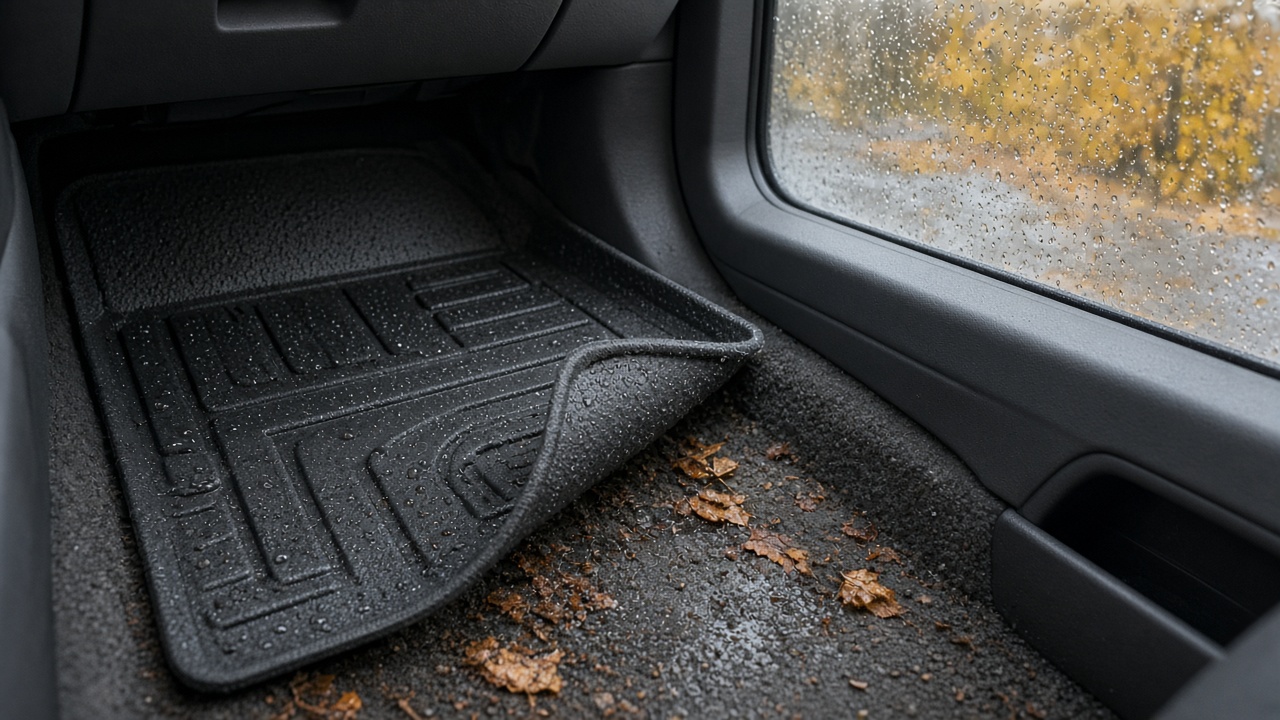
Wet fall mats trap leaf grit and moisture underfoot. Why Vancouver cars smell musty from the floor up, what DIY helps, and when to book a mobile interior detail.
By mid-October in Metro Vancouver, most drivers vacuum the seats and wipe the dash. The floor mats get a quick shake at the curb and go right back in. That habit is why so many Lower Mainland cars start to smell musty from the floor up long before the cabin looks dirty.
This guide is for Vancouver and Fraser Valley drivers dealing with wet all-weather mats, leaf grit packing underneath, and damp carpet that never quite dries between storms. It covers what fall weather does to the floor, which DIY steps actually help, and when it is worth booking a mobile interior detail that cleans under the mats, not just on top of them.
Why fall floors fail first in the Lower Mainland
Wet season here is weeks of damp shoes, soggy leaves, and short dry windows.
- •Leaf grit and mud stick to everything. Crushed leaves and trail mud ride in on boots and pack under mat edges where a quick vacuum never reaches.
- •Mats trap moisture against carpet. Rubber mats can look dry on top while the underside stays wet against factory carpet.
- •Closed-up cabins slow drying. Heaters run, doors stay shut, and a musty smell often starts under the driver's mat first.
- •Daily short trips stack the problem. School runs and errands never give the carpet a full dry-out day.
If the wider cabin already smells damp, our fall interior deep clean guide covers the full moisture picture. This post stays on the mats and the carpet underneath them.
All-weather mats vs carpet mats in wet season
Both types can work here. They fail in different ways.
All-weather and rubber mats
These are the wet-season default for a reason. Raised channels hold water and grit so less soaks straight into carpet. The catch: if you never lift them, grit and dirty water pack into the channels and along the underside. A mat that looks fine can sit on damp carpet with leaf sludge sealed underneath.
Carpet mats
Carpet mats feel nicer in summer but act like sponges in fall. Once soaked, they transfer moisture into the factory carpet below every drive. If you still run them through October, lift and dry them often, or switch to rubber for the rainy months.
Fit matters as much as material
Mats that curl, slide, or leave carpet exposed at the heel pad create wet spots no rinse will fix. Heel-pad wear and a dark outline under the driver's mat are early signs water is landing where it should not.
What to check under the mats this week
Park somewhere bright, open the doors, and lift every mat. Look for:
Grit packed under the edges
Leaf bits and dried mud collect along the tunnel, under the seat tracks, and at the mat corners, holding moisture against the floor.
Dark, damp patches on the carpet
A wet outline under the driver's mat is the classic Vancouver pattern. Cool or spongy carpet means moisture has been sitting there through multiple wet days.
Musty smell that spikes when you lift the mat
If the cabin smells faintly damp until you peel the mat up, and then the smell gets stronger, the source is the floor, not the seats.
Soft exterior note
Wet leaves on the paint and in the door jambs are a separate job. Clear them when you wash so less debris rides in on shoes; the bigger smell win is still what sits underfoot.
DIY mat care that actually helps
You do not need a full detail every week. A short floor routine between professional visits goes a long way:
- 1.Lift every mat and vacuum underneath first. Get grit out of carpet and seat-track areas before you rinse anything. Dirt left under a wet mat turns into mud paste.
- 2.Shake and rinse rubber mats outside. Use a hose or bucket rinse, scrub the channels with a soft brush, and rinse until the water runs clearer.
- 3.Dry mats fully before they go back in. Wipe them down, then stand them on edge until both sides are dry. Putting a damp mat back on carpet restarts the smell cycle.
- 4.Spot-blot the carpet, do not flood it. Blot with clean towels. A light wet/dry vac pass helps. Soaking carpet with a household machine can push water into padding you cannot dry easily at home.
- 5.Leave mats out on a dry day when you can. On a rare sunny afternoon, give the carpet a short, supervised air-out.
- 6.Switch to well-fitting all-weather mats for the wet months if you are still on carpet mats.
What DIY usually cannot fix
A hose rinse will not pull months of grit out of carpet or dry padding that has been wet for weeks. Cabin fresheners often mask a floor smell for a day. If the carpet stays dark, soft, or musty after you have dried the mats, it is time for extraction under the mats.
When to book a mobile interior detail for the floors
Bring in a detailer when:
- •the musty smell returns within a day or two of rinsing the mats
- •carpet under the mats stays damp or discoloured after DIY blotting
- •leaf grit and mud are packed into seat tracks and under the tunnel
- •you can see a permanent wet outline under the driver's heel area
- •you want the floors reset before months more of rain boots and short wet trips
Family cars with kids and snacks have extra floor mess on top of wet-season grit. That is a wider cabin job. This post stays on mats, leaf grit, and moisture trapped against carpet.
What floor-focused interior detailing looks like mobile
At Deluxe Detailing, mobile interior detailing includes steam cleaning, fabric shampooing, and complete vacuuming, with stain removal using hot water extraction and specialized cleaning agents on fabric and carpet. For floor-focused work, that typically means:
- •Full mat removal and deep vacuuming of carpet, under seats, and along the tunnel where grit hides
- •Mat cleaning so channels and undersides are free of packed leaf mud, not just wiped on top
- •Hot water extraction / fabric shampooing on carpet that has held moisture and dirt through wet weeks
- •Steam cleaning on hard plastics around the footwells where dirty water splashes
- •Odor work when damp floors have left a musty smell, using enzymatic cleaners and ozone treatment as needed alongside the deep clean
- •Hard surfaces and glass so the cabin feels finished after the floors are done
We will not promise every long-set odor vanishes in one visit. Most drivers notice drier-feeling carpet, cleaner mats, and a cabin that no longer smells damp when the heater kicks on.
Our fall mobile detailing checklist maps interior and exterior priorities for the season. Soft exterior work can wait for a dry window; the floors are worth fixing now.
How often should mats and carpets get attention here?
For most Lower Mainland daily drivers, lift-and-rinse rubber mats every one to two weeks in peak wet season, and book a proper under-mat extraction when DIY stops holding the smell down. Cars that sit outside, haul sports gear, or do school runs in the rain may need floor attention more often. Our how often to detail your car guide breaks down seasonal timing for the whole vehicle.
Done in your driveway
You do not need to drop the car off for a day. Our self-contained mobile units come to your home or office across Vancouver and the Fraser Valley, including Burnaby, Surrey, Richmond, Coquitlam, North Vancouver, and beyond. Park where you normally park; we bring the setup.
Reset the floors before the next wet stretch
Pricing depends on your vehicle and how much moisture and grit the mats and carpet are holding. The simplest next step is to book online or request a detailing quote. Lift the mats once this week. If what you find underneath is darker, gritier, or smellier than the top of the mat, get the floors done properly before the next long stretch of rain.