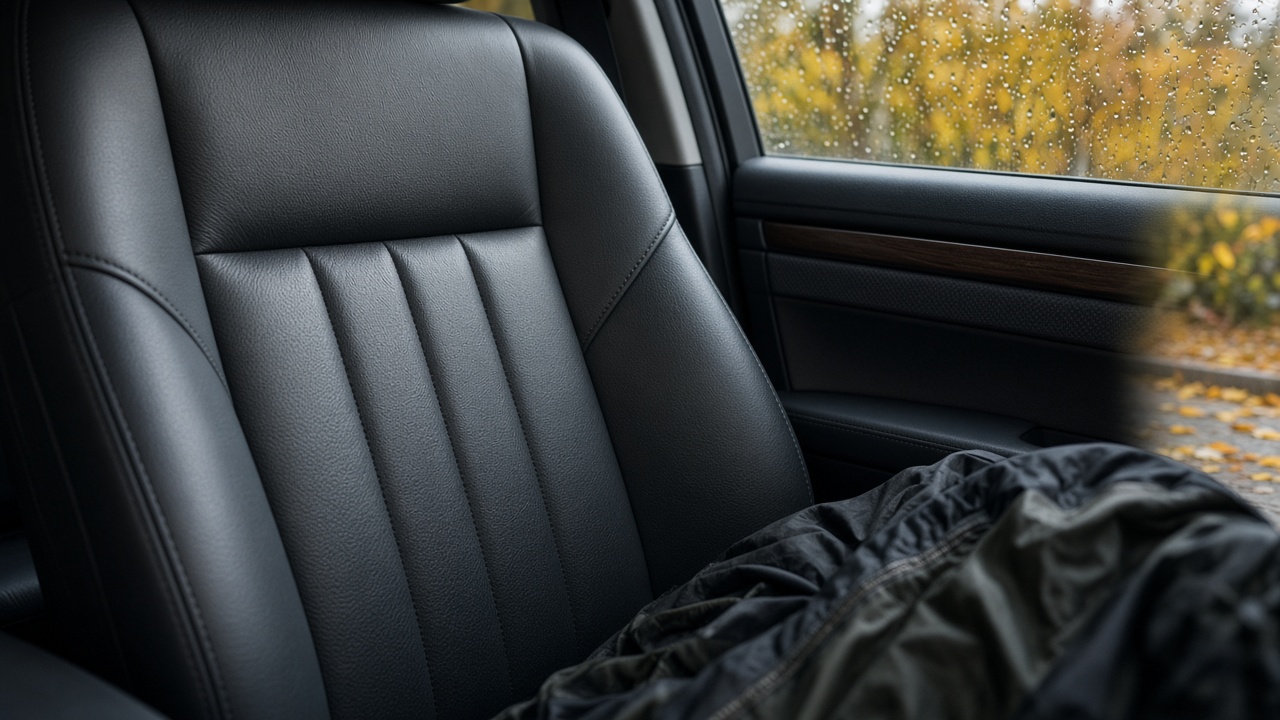
Summer UV dried your leather; wet season adds damp jackets and closed-up humidity. How to care for leather seats this fall, and when to book a mobile interior detail.
If your car has leather seats, October is usually when you notice them. Summer sun can leave leather looking dry and chalky. Then the rain arrives, the windows stay up, damp jackets land on the bolsters every commute, and those same seats start to feel sticky or dull instead of soft.
This guide is for Metro Vancouver and Fraser Valley drivers who want to get leather through the wet months without guessing. It covers what fall weather does to leather, which DIY habits help, and when it is worth booking a mobile interior detail that includes proper leather cleaning and conditioning.
Why leather has a rough fall in the Lower Mainland
Leather in this climate gets hit from both sides of the year.
- •Summer UV and heat pull moisture out of the top layer. Seats that sat in a sunny driveway or a west-facing parking lot often look lighter, feel stiff, or show fine lines in the high-wear spots (bolsters, seat cushions, driver's outer thigh area).
- •Fall humidity and closed-up cabins reverse the problem. Heaters run, windows stay shut, and moisture from wet clothes, umbrellas, and rain boots hangs in the cabin. Leather that was already dry can look blotchy as dirt and body oils settle into the grain.
- •Damp jackets and bags sit on the same seat panels day after day. That is how dye transfer from jeans or dark coats shows up as faint colour on light leather, and how water marks form on the surface.
- •Everyday abrasion does not pause for rain season. Getting in and out in heavier coats means more friction on the bolsters exactly when the leather is least flexible.
Leather is fine for Vancouver weather — it just needs a different fall routine than fabric seats.
What to look for before the wet months settle in
Walk through the cabin with the doors open on a bright day and check:
Dryness and chalkiness
Run a clean hand across the seat cushion and bolster. If it feels rough, squeaky, or powdery instead of smooth, the leather has likely dried out over summer and needs cleaning plus conditioning — not just a wipe with a random household spray.
Creases and wear lines
Creases along the seat cushion and outer bolster are normal. Fine cracking at the tips of those creases is the warning. Catching dryness early is much easier than trying to improve leather that has already split.
Stains, dye transfer, and water marks
Coffee rings, makeup, sunscreen, and denim dye are common on light interiors. Fresh marks respond better than ones that have baked in for months. Dark water spots from leaving a wet coat on the seat overnight are also worth dealing with now, before they get driven deeper by heat.
Dirt in the grain and stitching
Leather seats collect grit in the seams and perforation holes. That grit acts like sandpaper every time someone sits down. A surface wipe misses most of it.
The rest of the cabin (still leather's problem)
Floor mats, carpets, and door cards hold the moisture that keeps the cabin damp. If the floors stay wet, leather seats live in a humid box even when you condition them. Our fall interior deep clean guide covers the wider moisture picture; this post stays focused on the leather itself.
DIY leather care that actually helps
You do not need a full detail every month. A light, consistent routine between professional visits goes a long way:
- 1.Vacuum first. Get grit out of seams and perforation holes before you wipe anything. Dirt left on the surface scratches the finish when you wipe.
- 2.Use a dedicated leather cleaner, not dish soap, all-purpose spray, or baby wipes. Those strip oils or leave residue that attracts more dirt.
- 3.Wipe gently with a soft microfibre, working panel by panel. Avoid soaking the leather — damp cloth, not wet.
- 4.Condition after cleaning, not instead of cleaning. Conditioner on dirty leather seals dirt in. Use a product made for automotive leather and apply a thin, even layer; wipe off the excess so seats do not feel greasy.
- 5.Keep wet jackets and gym bags off the seats when you can. A hook, a rear seat, or a cargo bin beats a soaked coat on the bolster every afternoon.
- 6.Switch to rubber floor mats for the wet months so less water evaporates back into the cabin around the leather.
What DIY usually cannot fix
Household conditioner will not erase deep cracks, set-in dye transfer, or stains that have soaked through damaged finish. Aggressive scrubbing or silicone-heavy "shine" products can clog the grain or leave a sticky film. If the leather already looks tired, patchy, or cracked, skip another DIY experiment and book a proper clean.
When a professional leather detail is worth it
It is time to bring in a detailer when:
- •leather feels dry or chalky even after you have cleaned and conditioned it yourself
- •you see fine cracking starting at the high-wear creases
- •there are stains, dye marks, or water spots you cannot lift safely
- •the driver's seat looks noticeably more worn than the passenger side
- •you are heading into months of daily wet-commute use and want the seats protected before that wear piles on
- •the whole cabin needs a reset — carpets, mats, and hard surfaces — along with the leather
Family cars with leather plus kids in the back have a double workload; our family car detailing guide covers spills and car seats, while this post stays on the leather care side.
What leather conditioning looks like in a mobile detail
At Deluxe Detailing, mobile interior detailing includes steam cleaning, leather conditioning, fabric shampooing, and complete vacuuming. For leather-focused work, that typically means:
- •Thorough vacuuming of seats, seams, and the areas around the leather where grit collects
- •Leather-safe cleaning to lift body oils, dirt, and surface stains without stripping the finish
- •Stain treatment where needed, using methods suited to leather (the same professional stain-removal approach we use across leather, fabric, and carpet)
- •Conditioning to restore flexibility and help the surface handle daily friction through the wet months
- •Hard surfaces and glass so the whole cabin feels finished, not just the seat cushions
- •Odor work when damp clothes or spills have left a smell in the cabin, using enzymatic cleaners and ozone treatment as needed
We will not promise every old stain disappears or that cracked leather returns to showroom-new. Most drivers notice softer seats, a more even look, and leather better prepared for months of rain boots and closed windows.
Exterior plastics and door seals are a separate fall job — see our plastic trim and rubber seals guide. If you are already booking an interior reset and want exterior protection for rain season too, we can talk through options when you book; this post stays detailing-first around the leather.
How often should leather be conditioned here?
For most Lower Mainland drivers with leather, a solid clean-and-condition at the start of the wet season and another in spring is a practical rhythm, with light DIY wiping in between. Daily highway miles, light-coloured interiors, or a car that sits outside all day may want attention a little more often. Our how often to detail your car guide breaks down seasonal timing for the whole vehicle.
Done in your driveway
You do not need to drop the car off for a day. Our self-contained mobile units come to your home or office across Vancouver and the Fraser Valley, including Richmond, North Vancouver, Burnaby, Surrey, Coquitlam, and beyond. Park where you normally park; we bring the setup.
Soften the seats before the rain settles in
Pricing depends on your vehicle and how much attention the leather and the rest of the interior need. The simplest next step is to book online or request a detailing quote. Get the leather cleaned and conditioned now, and the wet months are a lot easier on both the seats and the people sitting in them.