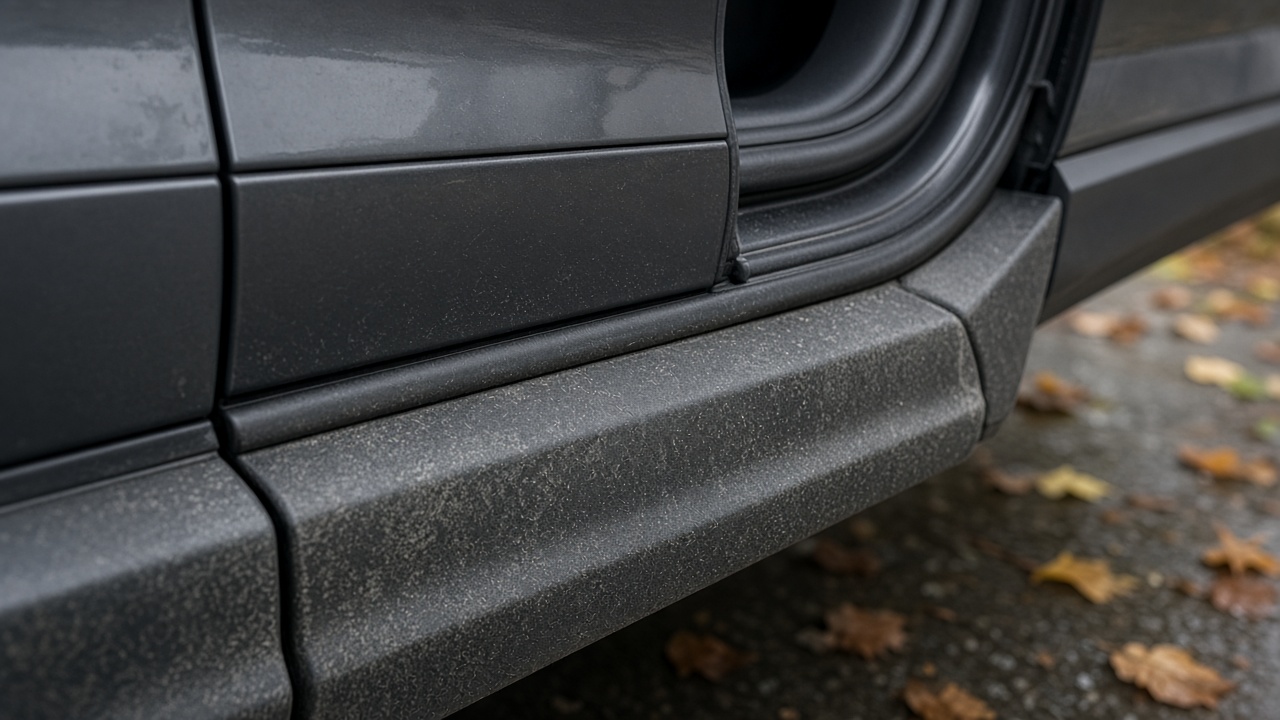
Chalky black cladding and dried door seals struggle before Metro Vancouver wet season. Why faded plastics and squeaky weatherstrips need fall care — and when a mobile exterior detail helps.
Walk around the car after a dry stretch of Metro Vancouver autumn and the paint may still look acceptable — while the black cladding has gone grey, the mirror caps look dusty even after a wash, and the door seals squeak when you shut them. Those unpainted plastics and rubber weatherstrips take UV all summer, then face months of wet parking and repeated door cycles. Fall is the right window to reset them before rain makes faded trim and dried seals harder to ignore.
Deluxe Detailing’s mobile exterior work treats black plastic trim and rubber seals as their own surfaces — not an afterthought wipe with the same towel used on paint. Below: how Lower Mainland seasons chalk cladding and dry weatherstrips, why a quick wash leaves plastics dull, what healthy seals feel like before wet season, when a careful detail helps, and how to keep DIY trim care from making the grey worse.
How summer UV and fall film chalk Metro Vancouver plastics
Unpainted exterior plastics — side cladding, bumper inserts, mirror caps, roof-rack feet, door-handle surrounds — sit in full sun on bridges, open lots, and condo roofs. UV breaks down the finish that keeps black looking deep. Then traffic mist, hard-water spots, and tunnel-wash residue settle into the texture and lock in a chalky cast.
What builds before wet season owns the calendar:
- •UV fade — black cladding and bumper plastics that read grey or mottled in daylight
- •Oxidation haze on textured plastics that a rinse never fully lifts
- •Traffic film stuck in grain so the trim looks dusty minutes after a wash
- •Dried rubber on door, hatch, and window weatherstrips that squeak or stick
- •Hard-water rings from hasty rinses that bake into light plastics and chrome-look surrounds
Paint film and plastic fade share the same climate, but the job is different. Clear coat can look “fine” while cladding announces every chalk line beside it. For the paint-and-wheel side of fall film, see road film and brake dust. This post stays on exterior black plastic trim and rubber seals.
Why a tunnel wash leaves plastics dull and seals ignored
Conveyor washes rinse and brush for speed. Soft plastics get a quick pass with the same chemistry aimed at paint, then air dryers push leftover soap into cladding seams and door-seal folds. You drive out with a shiny hood — and grey cladding that still looks neglected by evening.
Common leftover patterns:
| What you see | Likely cause |
|---|---|
| Grey or chalky cladding after a wash | UV fade plus film in the texture; no dedicated trim step |
| Mirror caps that look dusty by evening | Residue and oxidation the brushes never addressed |
| Squeaky door closes after rain week | Weatherstrips dried out; no rubber care in the wash cycle |
| Bumper plastics uneven vs paint | Paint got attention; unpainted inserts did not |
A careful exterior detail slows down for trim and seals: plastic-safe cleaners, dedicated dressing or restoration where needed, and rubber conditioners that keep weatherstrips flexible without greasing paint. It is not a second tunnel cycle — it is a trim-and-seal reset.
Rubber seals before wet season: flexible, not greasy
Door, hatch, and window weatherstrips keep cabin moisture and wind noise in check when they stay pliable. Summer heat and ozone dry the rubber; then fall rain and repeated open-close cycles stress seals that have gone stiff.
Keep the distinction clear: interior cabin moisture (mats, carpets, deep clean) is a different job — see fall interior deep clean. Exterior rubber seals are the weatherstrips you see and feel when you shut the door. Same wet climate, different surface.
Healthy seals before Lower Mainland wet season usually mean quiet closes, a soft flexible feel without sticky residue on paint or clothing, and less wind whistle on the highway. Hard, cracked, or squeaky rubber means the seal is working harder every rainy commute.
Plastic trim is not headlight plastic or glass
Cloudy headlamp lenses cut how much light you put on the road. Filmy windshields cut how clearly you see. Chalky cladding and mirror caps cut how finished the car looks. All three matter as evenings get shorter; they are not the same service.
- •Lens restoration lives in fall headlight restoration for Vancouver drivers
- •Glass clarity lives in fall windshield and glass care
- •Book trim and seal work for faded cladding, dull bumper plastics, squeaky weatherstrips, or dried door seals
Paint hydrophobics (including ceramic-coated clear coat) are a body-panel story — see ceramic wet season maintenance. Unpainted plastics and rubber seals use different products and expectations.
Soft DIY trim and seal tips (and what to avoid)
Tire shine sprayed on cladding often streaks, attracts dust, and can sling onto paint. Silicone-heavy dressings on door seals can leave oily residue on clothing and collect grit. Aggressive scrubbing on dry, chalky plastic scratches the texture more than it restores depth.
Between professional visits:
- •Wash paint and glass first so grit is not dragged onto trim from dirty panels
- •Use plastic-safe cleaners and clean microfibers on cladding and mirror caps
- •Wipe weatherstrips gently; apply a rubber-safe conditioner sparingly — wipe excess so paint stays clean
- •Avoid dry scrubbing chalky plastics; clean first, then dress or restore
- •Skip dressing products that turn trim permanently glossy or greasy if that is not the look you want
Mobile detailing brings controlled products, proper towels, and judgment on whether trim needs a light clean, a deeper restoration pass, or seal conditioning only. Deluxe mobile setups bring their own power, air, and purified rinse water — see mobile detailing in Vancouver.
What a trim-and-seal mobile exterior visit usually covers
Layouts differ, but a solid fall appointment that emphasizes plastics and rubber typically includes:
- •Look-over of cladding, mirror caps, bumper inserts, and visible weatherstrips for fade, chalk, and dryness
- •Dedicated plastic clean so film and oxidation lift from textured surfaces before any dressing
- •Trim restoration or dressing matched to the plastic type — depth restored without greasy overspray on paint
- •Rubber seal clean and condition on door, hatch, and window weatherstrips so closes stay quiet into wet season
- •Paint-adjacent wipe-down so product does not migrate onto clear coat or glass
- •Final check in natural light — trim should look even, not patchy wet-for-now
Owners often combine trim and seal work with a full exterior detail so paint film, glass, and plastics get handled together. Wheel-well grit is a separate arch job — see fall wheel wells and undercarriage. Pair with the fall mobile detailing checklist. For timing ideas, see our seasonal detailing frequency guide for Vancouver.
Driveway service from Vancouver through the Valley
No shop drop-off required for a trim-and-seal reset. Mobile exterior work meets you at home, a permitted office lot, or another spot with room to open doors and reach cladding safely. Burnaby and Surrey pages follow the same driveway-service approach — handy when wet evenings already fill the week.
Ask for plastic trim / rubber seal emphasis when you book if chalky cladding or squeaky weatherstrips are the trigger. Self-contained gear covers Vancouver and the Fraser Valley.
Book fall plastic trim and seal care at your driveway
Paint film, cloudy headlights, streaky glass, and chalky black plastics are related fall problems — and four different jobs. Handle trim and seals on their own terms before wet season digs in.
Faded cladding and dried weatherstrips are normal in Metro Vancouver autumn — and easy to ignore until the first rainy week makes every grey panel and squeaky door obvious. A careful fall detail that includes exterior plastics and rubber seals is practical upkeep: richer-looking trim, quieter closes, and seals ready for months of wet parking.
Ready to reset chalky trim and dried seals before the rains settle in? Book Online and mention plastic trim / rubber seal focus (and whether you want a full mobile exterior the same visit). Prefer to confirm coverage first? Visit mobile detailing Vancouver — Deluxe meets drivers throughout Metro Vancouver and the Valley.