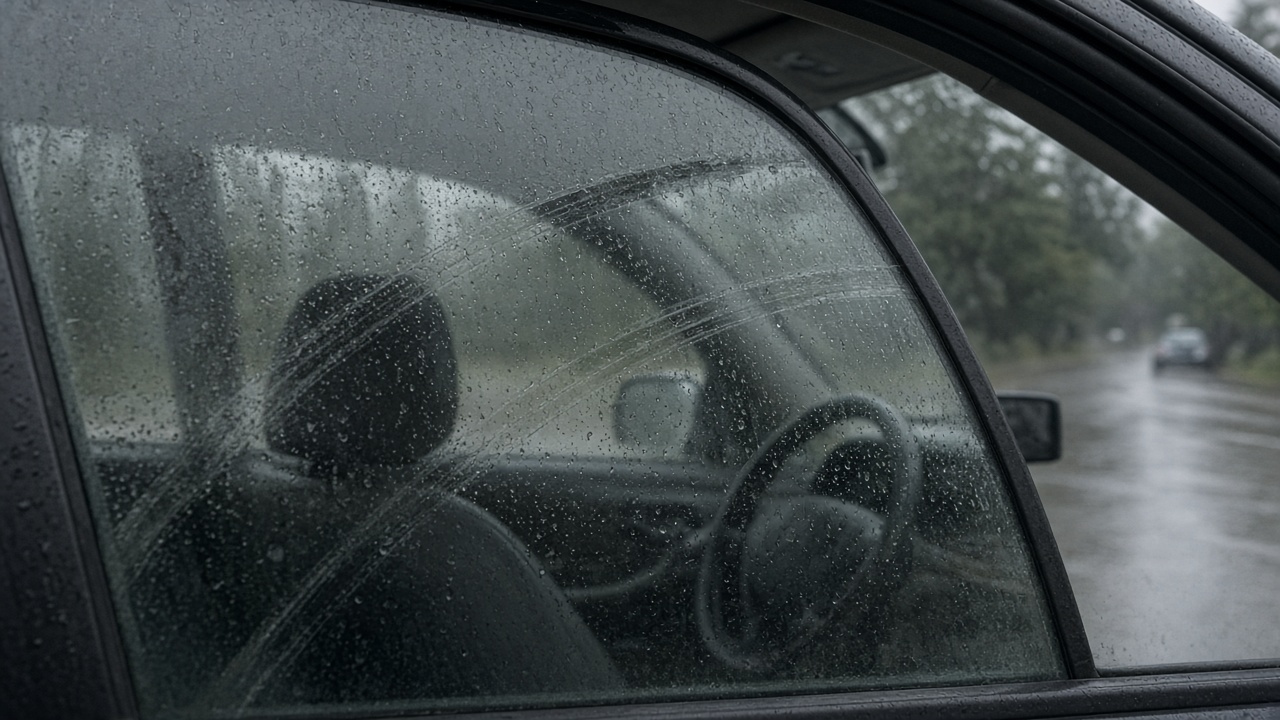
Road film and haze dull Metro Vancouver windshields before wet season. Why tunnel washes leave streaky glass — and when a fall exterior detail helps.
Hit the wipers on a damp Metro Vancouver commute and watch the story write itself: a greasy arc, a dry chatter line, a haze that turns oncoming headlights into soft blobs. The paint may still look “fine” after a tunnel wash. The glass often does not — and fall rain plus darker evenings make that gap hard to ignore.
Deluxe Detailing’s mobile exterior work treats windshield and side glass as a visibility job, not an afterthought wipe. Below: how Lower Mainland autumn loads film onto glass, why quick washes leave streaks, what healthy rain behaviour looks like, when a careful detail helps, and how to keep DIY glass care from making the smear worse.
How fall film lands on Metro Vancouver glass
Arterial spray, bridge mist, and exhaust haze settle on every vertical and raked surface. Windshields take the brunt because they face traffic and catch the full wipe cycle. Side glass and mirrors pick up the same oily mist plus parking-lot fingerprints and condo-garage dust.
What builds before wet season owns the calendar:
- •Traffic film — a thin oil-and-particulate layer that turns “clean” glass into a foggy lens at dusk
- •Wiper residue — old rubber and dried washer fluid that leave arcs where the blade travels
- •Bug and organic haze from late-summer routes that never fully left the glass face
- •Hard-water spots from hasty rinses that bake into rings between systems
- •Interior-side film on the windshield that doubles the blur when rain hits the outside
Paint film and glass film share chemistry, but the job is different. Painted panels hide dullness until you catch a reflection; glass announces every streak the moment lights come toward you. For the paint-and-wheel side of fall film, see road film and brake dust. This post stays on exterior glass clarity.
Why a tunnel wash often leaves streaky glass
Conveyor washes rinse and brush for speed. Glass gets a quick pass, then air dryers push leftover soap into corners and wiper parks. You drive out shiny on the hood — and watch rainbow streaks form the next rainy evening.
Common leftover patterns:
| What you see | Likely cause |
|---|---|
| Greasy arcs in the wipe path | Film the brushes never dissolved; blade dragging residue |
| Dry chatter or skip lines | Contaminated glass face, worn blade edge, or both |
| Spotty side glass after rain | Rinse water dried dirty; no dedicated glass step |
| Night glare worse after a wash | Soap haze plus oncoming lights; tunnel “clean” ≠ optically clear |
A careful exterior detail slows down for glass: dedicated cleaners, deeper decontamination when the face needs it, fresh wipe-downs, and time to dry without leftover surfactant. It is not a second tunnel cycle — it is a visibility reset.
Rain behaviour: hydrophobics on glass vs paint
When glass is clean and treated for water behaviour, rain beads and sheets so your wipers do less fighting. When glass is filmed, water smears into a translucent sheet that the blades push around instead of clearing.
Keep the distinction clear: paint hydrophobics (including ceramic-coated clear coat) are a body-panel story — see ceramic wet-season maintenance. Glass hydrophobics are about the windshield and side glass you look through. Same wet climate, different surface and products.
Healthy glass in a Lower Mainland downpour usually means beads that move with airflow, fewer dry spots in the wipe path, and less washer fluid every block. Dull, sticky glass means constant washer use and a grey smear that never quite leaves. You need glass that looks clear at dusk, not only at noon.
Wiper chatter is often a glass problem first
Blades get blamed first, and worn rubber is real. But chatter and skip often start with a contaminated windshield — the edge catches micro-film and loses the smooth glide quiet wiping needs.
Before you only replace blades:
- 1.Clean the glass properly — inside and out — so you are not judging a dirty face
- 2.Wipe the blade edge with a clean microfiber and mild glass-safe cleaner
- 3.Check for pitting or deep etching that no wipe will fix (shop glass work if needed)
- 4.Replace blades when the rubber is torn, hardened, or permanently hooked
A fall exterior detail that includes glass often restores quiet wiping — or shows the rubber is truly done. Pair with the fall mobile detailing checklist so glass is not the only neglected fall item.
Headlights are a different visibility job
Cloudy plastic headlamp lenses cut how much light you put on the road. Filmy windshields cut how clearly you see what that light hits. Both matter as evenings get shorter; they are not the same service. Lens restoration is in fall headlight restoration for Vancouver drivers. Book glass work for haze, streaks, or rain smear on the glass you look through.
Soft DIY glass tips (and what to avoid)
Gas-station squeegees and paper towels push grit and leave lint in the wipe path. Ammonia-heavy cleaners can be hard on tinted films. Circular scrubbing on a dry windshield scratches more than it cleans.
Between professional visits:
- •Wash or rinse paint first so grit is not dragged onto glass from dirty panels
- •Use a dedicated glass cleaner and clean microfibers — one for wash, one for final wipe
- •Clean the inside of the windshield too; cabin film doubles dusk blur
- •Lift wipers and wipe the blade edge after muddy storms
- •Avoid dry scrubbing stuck debris; soften first, then lift
Mobile detailing brings controlled products, proper towels, and judgment on whether glass needs a light clean or a deeper pass. Deluxe mobile setups bring their own power, air, and purified rinse water. Start with mobile detailing in Vancouver for how driveway service works.
What a glass-focused mobile exterior visit usually covers
Layouts differ, but a solid fall appointment that emphasizes clarity typically includes:
- •Look-over of windshield, side glass, rear glass, and mirrors for film, etching, and wiper wear
- •Paint-adjacent film removal so oily mist on A-pillars and cowl edges is not re-smeared onto glass
- •Dedicated exterior glass clean (and interior glass when booked) so both faces of the windshield match
- •Wiper-path attention so residue arcs are broken before the next rainy commute
- •Dry-down and final optical check in natural light — not only a “wet and shiny” glance
Owners often combine glass work with a full exterior detail so paint film and glass haze get handled together. Leaf pulp in the cowl is a separate story — see leaf debris and cowl vents. For timing ideas, see our seasonal detailing frequency guide for Vancouver.
Driveway service from Vancouver through the Valley
No shop drop-off required for a glass-and-exterior reset. Mobile exterior work meets you at home, a permitted office lot, or another spot with room to work the glass safely. Burnaby and Surrey pages follow the driveway-service approach used citywide — handy when wet evenings already fill the week.
Ask for windshield / exterior glass emphasis when you book if night glare or wiper chatter is the trigger. Self-contained gear covers Vancouver and the Fraser Valley.
Book fall windshield and glass care at your driveway
Paint film, cloudy headlights, and streaky glass are related fall visibility problems — and three different jobs. Handle glass on its own terms before wet season digs in.
Road film on glass is normal in Metro Vancouver autumn — and easy to ignore until the first dark, rainy commute makes every oncoming light bloom. A careful fall detail that includes the windshield and exterior glass is practical upkeep: clearer vision, quieter wipers, and less washer-fluid guessing every block.
Ready for clearer glass before the rains settle in? Book Online and mention windshield / exterior glass focus (and whether you want a full mobile exterior the same visit). Prefer to confirm coverage first? Visit mobile detailing Vancouver — Deluxe meets drivers throughout Metro Vancouver and the Valley.