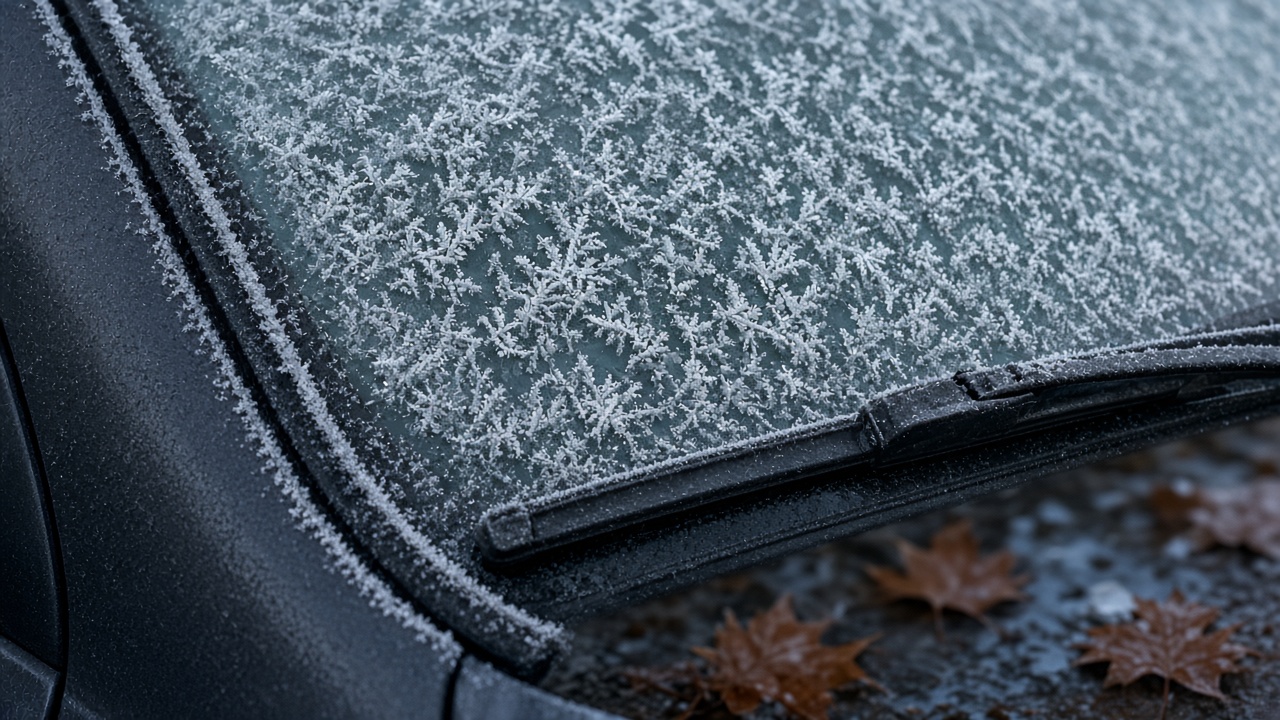
First frost in the Fraser Valley sticks door seals and fogs the glass. See what to check before you scrape, and when a detail helps. Book a mobile detail.
Late October into early November is when a Fraser Valley driveway can frost while a downtown Vancouver stall stays wet. You walk out in Langley, Maple Ridge, Abbotsford, or on a Burnaby hillside and the glass is white. The door rubber can stick. The wipers can freeze to the windshield. Clocks fall back on November 1, so that first scrape often happens in the dark, before Highway 1.
This guide stays on that first frost morning: seals you can check the night before, glass to clean before you scrape, and paint that looks fine until the sun melts the frost. Chalky trim is in our plastic and rubber seal guide. Road film on the windshield is in our fall glass clarity guide. Yellowed lenses are a listed headlight restoration service, in our headlight guide. Book a mobile detail and we will come to the driveway or the parkade.
Why the first frost shows up before downtown does
Metro Vancouver does not freeze as one city. A Yaletown or Richmond underground stall can stay above freezing while a Langley carport, a Maple Ridge driveway, or a Chilliwack street goes white overnight. North Vancouver and higher streets in Burnaby and Coquitlam can do the same after a clear, wet evening. A few hours near freezing is enough.
Where the car actually freezes
Open parking frosts first. A carport can still frost the glass that faces the sky. A closed garage often stays clear. An underground Vancouver stall usually will not frost the paint, though the cabin can fog once you drive into colder air. If the car lives outside in Abbotsford, Maple Ridge, or Langley, plan on a stuck-door morning before December.
What the white coat is sitting on
Frost forms on whatever is already on the panel. Clean glass gets a thin coat. Glass with road film, sap, or dried washer fluid holds frost against that dirt, and the scraper drags grit. A quick rinse the night before can leave that film in place when the temperature drops.
Door seals that stick on the first cold morning
Wet weatherstrips can freeze to the painted frame. A hard pull can tear the rubber or lift a little paint at the edge. Our plastic trim and rubber seal guide stays on chalky cladding and a squeak. This section is the morning the door will not open cleanly.
A check you can do the night before
Shut the door on a dry seal when you can. After rain, wipe the rubber and the painted frame with a clean, dry microfiber. Look for a seal that is torn, flattened, or pulling out of its track. That is a technician job. Check your owner's manual before any dressing goes on the rubber. Some products can swell a seal or smear onto the paint.
What to skip when the door is stuck
Leave the handle alone if the door will not release. Skip hot water on the seal and the glass. A sudden temperature change can crack a windshield, and the water can run into the door and freeze again. If one door opens, use it and let the cabin warm before you force the stuck one. If every door is frozen, wait rather than pry at the paint.
- •The seal is torn or hanging out of the channel. That is a parts and shop visit.
- •Paint at the door edge is already lifting. We can wash around it. We do not repair paint.
- •The same door sticks on mild mornings too. A misaligned latch belongs with a shop.
How an exterior detail helps the rubber
On a mobile visit we can wash the jambs, wipe the weatherstrips, and dress automotive rubber when you ask for that step. We do not replace a torn seal. Tell us if a door stuck last week. Clean, dry rubber is less likely to hold ice against the paint. It can still freeze on a hard night.
Scraping frost off glass that is already filmed
The mark you notice later is often from the scraper, on glass that was already sandy. A blade across road film can leave fine arcs you see when headlights hit the windshield. Clean the glass while it is still a fall wash.
The outside of the windshield
Wash the outside glass, including the strip under the wiper arms, before you expect a freeze. Use a glass cleaner meant for cars and a clean microfiber. If the glass is etched, a wipe will not clear it. Our windshield clarity guide covers the greasy arc a tunnel wash can leave. This post stays on the frost on top of that film.
On the morning itself, start the defroster and give the glass a minute. Lift loose frost with a plastic scraper once the edge has softened. Keep the blade off a dry, dirty patch and off the paint. Check your owner's manual for cold-weather washer fluid. We do not fill washer fluid on a detailing visit.
Wipers frozen to the glass
If the blade is stuck, leave the wiper switch alone. The motor can strain, and the rubber can tear. Free the arm by hand only after the glass has warmed. Wipe the blade edge once it is free. Torn or hardened rubber is a replacement you or a shop handles. Clean the glass first, then judge the blade. A new blade on filmed glass will still smear.
Leaves under the arms hold water and freeze into a ridge. Our leaf and cowl vents guide covers that channel. Clear what you can see. Leave the cowl drain alone.
Rear glass, mirrors, and cabin fog
The rear window and the mirrors frost too. After November 1 the school run is darker, so a white rear window hides the backup view. Use the rear defroster, and scrape only after the frost softens. Greasy haze on the inside is cabin film, in our cabin glass haze guide. Dust from the fan on the first hard defrost is the heater season guide. Keep glass cleaner off the dash screen.
Light frost on the paint, the roof, and the mirrors
A thin frost on the hood and roof is mostly water. Left to melt in the sun on a dirty panel, it can dry into spots. Mirror glass picks up the same coat, and a dark commute makes a fogged mirror awkward.
Let it melt, then dry the panels
Leave the paint alone with a scraper. A blade can mark the clear coat. Let the frost melt, or rinse with cool water once the panel is no longer a sheet of ice. Dry the hood, roof, trunk, and mirror glass. A closed stall in Surrey or Richmond may not finish that dry, so towel what you can reach.
Spots that show up once the sun hits
Mineral spots are the rings left when dirty water dries. Our rain spots guide covers why those marks can etch if they bake. Wash and dry before the sun follows a frosty dawn, and mention dull clear coat when you book.
A simple first-frost routine
Use this order before the first freeze you expect, and again on the morning the glass is white. A Coquitlam driveway, a Chilliwack street, a Surrey carport, or a North Vancouver hill all count.
- 1.The night before. Wipe the outside glass, including under the wipers, and dry the door seals. Note a torn seal.
- 2.Clear leaves from the glass and the base of the windshield. Leave the cowl drain alone.
- 3.On the frosty morning. Start the defroster. Leave stuck wipers off. Skip hot water on the glass and the seals.
- 4.Use a door that opens. Let the cabin warm before you pull a stuck seal.
- 5.Scrape softened glass only. Use a plastic blade on the windshield and rear window, and keep it off the paint.
- 6.Dry the melt on the hood, roof, mirrors, and glass.
- 7.Book the film a wipe will not lift. Tell us the car parks outside.
What a mobile visit covers before the cold mornings
We come to the car. The visit can include a wash of the paint, glass inside and out when you book it, the door jambs, and the weatherstrips. Our units are self-contained, with on-board power, compressed air, and purified water, so we do not need your hose or your electricity. Our condo parking guide covers fobs and height if the car only frosts on weekends outside.
Glass, seals, and a coating conversation
As certified System X and Revivify installers, we can coat paint, glass, and wheels once they are clean. The System X Gold package includes Glass+ on the windows and windshield, plus Wheel+ on the face of the wheels. System X packages range from two to ten years of warranty coverage. Revivify graphene coating uses a flexible layer with a five-year warranty. A coating does not stop frost. It goes on clean glass and paint, where it can help later rain release. Compare options on our ceramic coating page, or get a ceramic quote.
We do not mount winter tires, fill washer fluid, or install wiper blades. Replace torn blades after the glass is clean, so you can see whether the smear was the rubber. Winter wheels are in our tire swap guide.
Book your fall first-frost detail
We come to the car. Service runs through Vancouver, Burnaby, Richmond, Surrey, North Vancouver, and Langley, including driveways and condo stalls across Metro Vancouver and the Fraser Valley. Tell us the car parks outside, whether a door stuck, and whether the glass smears after you scrape. You can also request a detailing quote if you want to describe the car first.
Pricing depends on your vehicle's size, condition, and the package you choose, so the fastest way to see options is to book online. If you want the paint and glass protected before the wettest, coldest weeks, get a ceramic quote and we will walk you through System X and Revivify for your car.